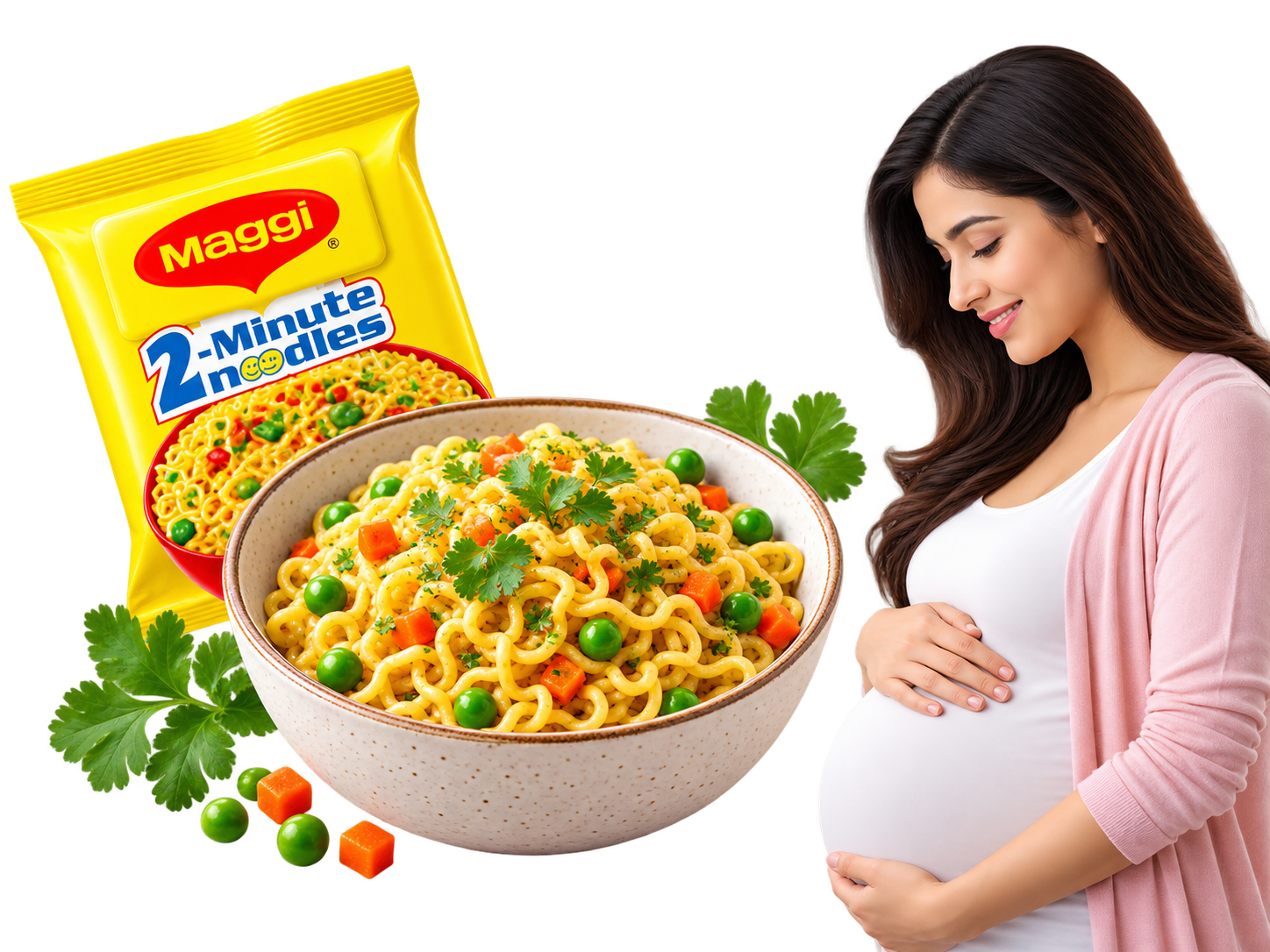
Classic Masala provides 750 mg sodium in one 75 g serving. It provides only 6.2 g protein before adding other foods. Indian product information reports no added MSG or E621. Those facts make portion size and meal balance important during pregnancy.
Check each packet because recipes and serving sizes can change. Both wholegrain variants contain more sodium than Classic Masala. Compare each serving size, sodium, fibre, and allergens before choosing.
Check four things before eating Maggi during pregnancy
Before eating Maggi, check the exact product, serving, eating pattern, and medical needs. These four facts help you make a personal food decision.
- Product: Confirm the current India variant and ingredient panel before cooking.
- Portion: Compare one listed serving with your actual prepared amount.
- Eating pattern: Notice recent noodles replacing a fuller meal.
- Personal needs: Follow your clinician-set sodium or carbohydrate target each day.
For Maggi during pregnancy, four checks work better than guilt. One parent may enjoy one bowl after several varied family meals. Another may eat noodles daily while managing gestational diabetes.
The same product needs different decisions across those two patterns. Packet facts remain the same, while personal nutrition limits can differ. That difference prevents easy yes-or-no answers for everyone.
What one Classic Masala serving contains
One Classic Masala serving contains 750 mg sodium and 6.2 g saturated fat. The current Indian product page defines one serving as 75 grams. It also lists 288 calories and 6.2 grams protein.
The current MAGGI India nutrition panel provides the following serving values. Use the per-serving column when comparing your packet.
| Nutrient | Per 75 g serving |
|---|---|
| Energy | 288 calories |
| Protein | 6.2 grams |
| Carbohydrate | 44.7 grams |
| Total fat | 9.4 grams |
| Saturated fat | 6.2 grams |
| Sodium | 750 milligrams |
| Iron | 5.17 milligrams |
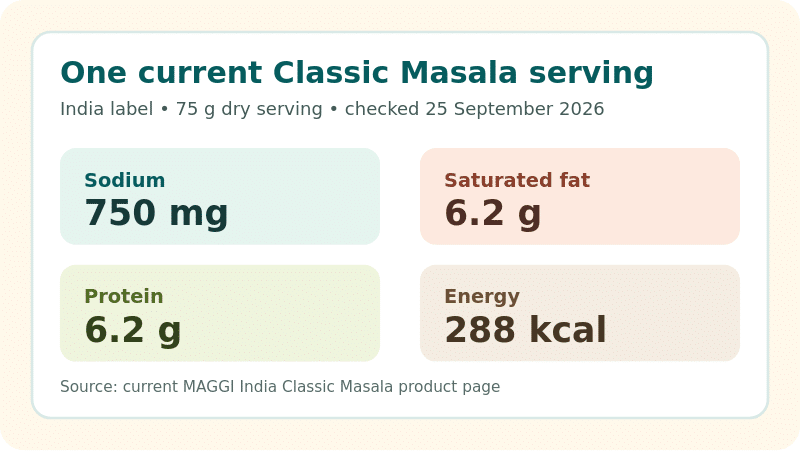
- Sodium benchmark: The World Health Organization recommends under 2,000 mg sodium daily for adults. One Classic serving equals about 38 percent of that benchmark. These other foods can add extra sodium across the whole day. Diagnosed hypertension may bring a different clinician-set sodium target.
- Salt wording: Package labels report sodium, while household salt naturally contains sodium. Both words are related, although their numbers remain different. Hypertension describes blood readings that remain too high.
- Saturated fat: Count saturated fat across the whole daily diet. Food labels list saturated fat as one specific type of fat. It supplies 6.2 grams before adding cheese or cream. Listed protein cannot replace variety across a complete daily diet.
- Meal variety: Your body needs many different nutrients each day throughout pregnancy. The ICMR-NIN Dietary Guidelines for Indians favour varied foods during pregnancy. They include pulses, vegetables, fresh fruits, grains, dairy, eggs, fish, and meat. Instant noodles cannot supply the full variety across those groups.
Check packet and serving sizes before calculating Maggi nutrition
One packet may match one serving, but larger packs can differ. Read the serving weight before treating the entire pack as one portion.
- Label numbers: The Classic page uses a 75 gram serving. Another packet may show a different weight or several serving sizes. Nutrition values follow the serving printed beside each label number.
- Prepared amount: Cooking water makes the finished bowl heavier without removing sodium. Two prepared servings contain twice each listed nutrition amount. Added foods change the meal without changing original noodle values.
- Practical comparison: Compare serving weight with each listed nutrient. Per-100-gram values support more accurate comparisons across different packet sizes. Sharing one packet changes the portion each person eats. Cooking two packets for one person changes the calculation completely.
Does Maggi contain MSG or Ajinomoto in India?
MAGGI India reports no added MSG or E621. MSG refers to monosodium glutamate, while Ajinomoto is a familiar brand name. E621 is the food additive number used for MSG.
- India statement: The MAGGI India transparency page covers noodles and the Masala Tastemaker. Its statement covers products from Indian factories. Other markets may use different formulas and ingredient labels.
- Natural glutamate: The Nestlé India safety page notes naturally occurring glutamate from several ingredients. No added MSG differs from zero naturally occurring glutamate. Natural glutamate can make some laboratory tests report MSG during screening.
- Different terms: The FDA MSG explainer confirms glutamate and gluten are different substances. Some Indian MAGGI labels list flavour enhancer E635. E635 refers to disodium ribonucleotides, which differs from MSG/E621. Seeing E635 cannot prove hidden added MSG.
- Current packet: Older articles frequently repeat an added-MSG claim about MAGGI. Readers need both the current market and current product pack. Check the ingredient panel when country, formula, or package details change.
- Vegetarian status: The MAGGI India FAQ reports no pig fat or pork. Chicken Noodles remains the named non-vegetarian variant in that product line.
Are Atta and Oats Maggi better during pregnancy?
Atta and Oats MAGGI provide fibre, yet both contain more sodium than Classic. Current serving labels place both variants above Classic Masala for sodium. Wholegrain branding alone cannot answer every nutrition question.
No single current variant has the lowest value in every column. Each label favours a different nutrition feature.
| Current India variant | Serving | Sodium | Fibre | Saturated fat |
|---|---|---|---|---|
| Classic Masala | 75 g | 750 mg | Unlisted | 6.2 g |
| Atta Masala | About 72.5 g | 827.8 mg | 3.1 g | 6.2 g |
| Oats Masala | About 72.5 g | 887.6 mg | 2.9 g | 5.2 g |
| Veggie Masala | About 62 g | 705 mg | 1.7 g | 4.9 g |
Sources: current India pages for Classic Masala, Atta Masala, Oats Masala, and Veggie Masala. All values use the serving sizes shown above.
- Fibre comparison: Atta and Oats provide listed fibre, while Classic lists none. Yet both current servings provide more sodium than Classic.
- Veggie serving: Veggie Masala lists less sodium alongside a smaller serving. Serving weight still belongs beside every nutrient comparison.
- Personal comparison: Compare the nutrient linked to your medical or meal needs. Read sodium, serving weight, fibre, saturated fat, and allergens together.
- Current packet: Pack formulas and serving sizes can change after publication. Use the table, then confirm every value on your packet.
How frequently can you eat Maggi during pregnancy?
Have Maggi only for occasional cravings during pregnancy. Official pregnancy guidance provides no universal MAGGI-specific weekly allowance. No product-specific evidence supports a fixed once-weekly rule for everyone.
Look at your full eating pattern beyond any single calendar number. An occasional bowl differs from regularly replacing nourishing daily meals.
Frequent noodle meals can crowd out vegetables, protein, fruit, and varied grains. That pattern can reduce available space for varied pregnancy foods.
Ask yourself three practical questions before choosing another bowl. Your answers can separate one craving from a repeated eating habit.
- Did another instant-noodle meal replace your lunch or dinner recently?
- Does the remaining day contain useful protein and vegetables?
- Has your clinician set sodium or carbohydrate targets?
Daily noodle meals need a different response than one isolated craving. Choose a nourishing meal whenever instant noodles repeatedly replace more varied foods. The pregnancy diet needs more than calories and convenience.
Cravings alone cannot prove a nutrient shortage. They also cannot make one serving dangerous automatically. Consider the wider eating pattern without attaching guilt to one meal.
What should you do after eating Maggi while pregnant?
One bowl rarely calls for panic, punishment, or missed meals. Return to varied foods and fluids across the day.
- Next meal: Choose vegetables, fruit, pulses, eggs, dairy, or familiar foods. Continue your normal eating routine at the next planned meal.
- No compensation: Avoid cutting later meals because of one isolated craving. One serving needs no special detox drink afterward.
- Symptoms: A recent bowl cannot identify the cause of pregnancy symptoms. Call your maternity team for the warning signs listed below. Personal medical targets still apply after any noodle meal.
Can you eat Maggi during every pregnancy trimester?
You can occasionally eat Maggi during any stage of pregnancy. Available guidance contains no MAGGI-specific trimester rule. Individual symptoms and diagnosed conditions can still change personal choices.
First trimester: nausea may narrow foods you can tolerate. A tolerated bowl may provide food during a difficult day. However, repeated noodle use can crowd out folate-rich foods and protein.
Second trimester: growing needs make varied meals more useful. Pairing noodles with vegetables and protein creates a fuller meal. The original sodium remains present after those additions.
Third trimester: reflux or swelling may affect food comfort. Spicy packet seasoning can worsen reflux for some pregnant people. Sudden swelling needs prompt medical assessment, since pre-eclampsia requires professional assessment.
Reviewed sources showed no current MAGGI-specific evidence for miscarriage or birth defects. Online warnings alone cannot prove either outcome.
High sodium deserves attention, but it cannot prove a disease cause. Pre-eclampsia is a pregnancy illness requiring prompt medical assessment. NICE advises against salt restriction solely for preventing pregnancy pre-eclampsia. Its guideline still supports personal dietary advice for people with chronic hypertension.
How can you build a fuller Maggi meal?
Add vegetables and protein while remembering the original sodium remains inside the noodles. These additions improve meal variety, while sodium remains unchanged. Skip any extra salt, salty sauces, and additional seasoning powders.
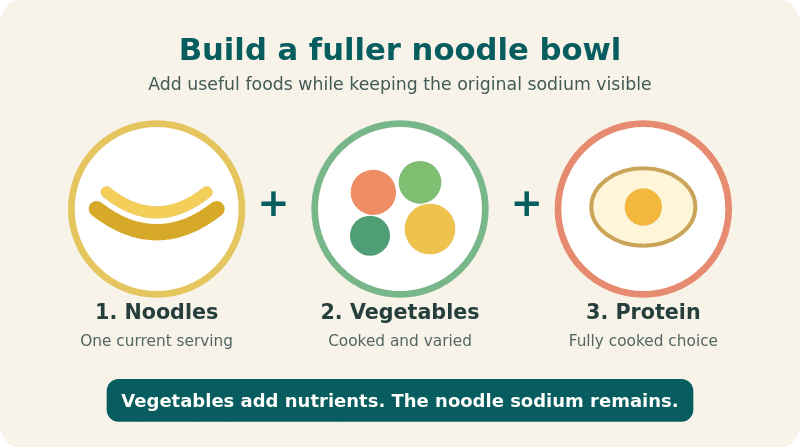
- Cook carefully: Follow printed packet directions using clean water.
- Add vegetables: Use one generous handful of cooked vegetables when tolerated. Peas, carrots, spinach, beans, or capsicum add colour and variety.
- Add protein: Choose fully cooked egg, tofu, paneer, chicken, fish, or pulses. Food allergies and personal medical advice may narrow these options.
- Build your bowl: Peas, carrots, and cooked egg make one useful bowl. Spinach, tofu, and lemon offer another familiar combination.
- Remember the limits: Vegetables cannot remove sodium from the noodles. Extra protein cannot change the listed saturated fat amount.
Does using less Maggi Tastemaker reduce sodium?
Using less Tastemaker may reduce some sodium, but labels show no exact amount. Published nutrition combines the noodle cake and Tastemaker within one sodium number.
- Half packet: Never treat half the powder as half the sodium. The noodle cake may contain part of the listed sodium. Public pages leave the noodle sodium amount unknown.
- Other additions: Homemade masala may still add salt to the bowl. Sauces, cheese, and packaged spice powders may add extra sodium.
- Taste choice: Use less Tastemaker for a lighter flavour. Use the full serving number as the published sodium reference.
- Sprout safety: Avoid raw sprouts as an easy pregnancy noodle topping. The CDC pregnancy food-safety page recommends steaming-hot cooked sprouts. Choose cooked vegetables or thoroughly cooked sprouts for your bowl.
When medical conditions change Maggi advice during pregnancy
Hypertension, kidney disease, diabetes, and allergies can change your Maggi choice during pregnancy. Ask your obstetrician or dietitian which nutrient needs a personal target. Bring the current packet or a readable label photograph.
These situations need personal advice because nutrition targets can differ. Take these questions to your next medical appointment.
Maggi, gluten, and allergy concerns
Coeliac disease requires avoiding gluten from wheat. Standard MAGGI noodles contain wheat and need careful label checking. Cross-contact warnings show possible allergen contact during factory production. Read every ingredient and warning on your exact current packet.
Official MAGGI India answers cover current milk and soy trace wording. The warning marks possible factory contact with other products. The FAQ reports no milk as a direct noodle ingredient. Take the packet when a clinician needs exact allergen ingredient details.
Maggi with hypertension or kidney disease
Ask your clinician about personal sodium and fluid targets. Kidney disease or hypertension can change those targets during pregnancy. NICE pregnancy guidance separates personal treatment from universal salt restriction during pregnancy.
Maggi with gestational diabetes
Classic Masala lists 44.7 grams of carbohydrate per serving. Ask how one serving enters your personal carbohydrate meal plan.
Pregnancy symptoms needing urgent medical help
Contact your maternity team immediately for severe headache or vision changes. Severe upper abdominal pain also needs prompt medical assessment. Sudden face, hand, or foot swelling deserves the same response. Those warning signs can signal pre-eclampsia and need immediate medical assessment.
What to check on a Maggi packet during pregnancy
Check the exact pack because variants and formulas can change. A six-part label check catches common packet mix-ups.
- Confirm the label identifies India as its intended market.
- Read the exact variant name near the brand.
- Find serving weight before comparing nutrition numbers.
- Check both sodium and saturated fat per serving.
- Review allergens and any cross-contact warning carefully.
- Check expiry, storage directions, and packet condition carefully.
Prepare the noodles using clean water and packet directions. Cook every added egg, meat, fish, or sprout thoroughly throughout. Discard damaged, leaking, swollen, or expired packets.
MAGGI can remain an occasional convenience food during pregnancy. Check current packet facts before repeating any older MSG claims. Check the serving, complete the meal, and respect personal medical targets.
How we verified the Maggi pregnancy facts
We compared current MAGGI India product pages with Indian pregnancy diet guidance. We also checked WHO sodium guidance and NICE pregnancy hypertension advice. The comparison used serving values checked on 28 September 2026.
Product formulas may change after that review date. Your current packet remains the final product reference point. No qualified clinician reviewed the completed draft.
Conclusion: Can you eat Maggi during pregnancy?
Yes, you can eat Maggi occasionally during pregnancy when medical advice allows. Choose one serving and add cooked vegetables with a useful protein food.
Check sodium, serving size, and allergens on the current packet. Frequent bowls should never replace varied meals across the week.
Sources
- MAGGI India: Classic Masala nutrition
- MAGGI India: ingredients and no-added-MSG statement
- MAGGI India: Atta Masala nutrition
- MAGGI India: Oats Masala nutrition
- MAGGI India: Veggie Masala nutrition
- ICMR-NIN: Dietary Guidelines for Indians 2024
- WHO: Sodium reduction
- NICE: Hypertension in pregnancy recommendations
- CDC: Safer food choices during pregnancy
- MAGGI India: FAQ about MSG and allergen cross-contact
- Nestlé: India noodles, natural glutamate, and 2015 testing
- FDA: Questions and answers about MSG